
The modern commute has turned into a pocket problem. Keys, phone, earbuds, badge, sunglasses, charger, wallet, lip balm, hand sanitizer, and maybe a snack all need to move with you without turning every subway step or parking-lot walk into a small search mission. The Osprey Daylite Sling is getting attention because it answers that problem without pretending to be a full backpack. For many Americans who split their day between the train, the car, the office, and an after-work errand, a small bag can feel more honest than a bulky pack. That is why gear trend coverage keeps circling back to carry gear that trims the day down instead of adding more gear drama. A good everyday carry bag should not make you think about it every five minutes. It should sit close, swing forward fast, and keep your small stuff in reach when the coffee line moves or the bus doors open. The appeal is plain: people want freedom of movement without emptying their pockets onto every counter.
Why the Osprey Daylite Sling Fits the New Commute
A city commute does not punish you with one huge problem. It wears you down through small interruptions. You need your phone at the turnstile, your badge at the elevator, your sunglasses at the curb, and your wallet when the lunch place still has a line out the door. A compact crossbody bag works because it treats those moments as the main job, not as an afterthought. The rise of hybrid work has made this even clearer. Many people no longer pack the same way each day, so a smaller bag can match the shape of the morning instead of forcing every morning into the same setup. That matters in places where one day means a car commute and the next means a short train ride plus a walk. The bag has to handle both without feeling like the wrong choice.
Small Gear Wins When the Day Keeps Changing
The old commuter rule was simple: carry one backpack and be ready for anything. That still makes sense for a laptop-heavy office day. Yet plenty of people no longer move like that. You may work from home three days a week, visit a client once, take a half-day at the office, or walk a few blocks to a coworking space with no need for a laptop bag.
That is where a sling earns its place. It does not ask you to pack like you are leaving town. It gives your essentials a home, then gets out of the way. For a person in Chicago hopping between the L, a corner coffee shop, and a shared desk, that can matter more than having room for a sweater and lunch container. It also keeps your outfit from feeling overloaded when you are dressed for a normal workday, not a trailhead. A sling can look at home with jeans, a work jacket, or gym shorts, which helps explain why commuter gear is no longer only judged by outdoor standards.
The odd part is that less space can feel more organized. A large bag invites you to carry things you do not need. A smaller pack forces a clean edit. Phone, wallet, keys, earbuds, charger, maybe a small notebook. Done.
The Front-Swing Advantage Matters More Than Capacity
The best part of a sling is not always the size. It is the motion. You can pull it from your back to your chest without taking it off, which feels small until you have to do it six times in one morning. Backpacks make you stop, shrug, unzip, dig, zip, and reset. A sling lets the whole action happen in one clean move.
That motion changes how you use the bag. At a train platform in New York, you can keep the pack in front while the crowd tightens. In a grocery line after work, you can reach your card without setting anything on the floor. In a rideshare, you can keep it on your lap instead of wrestling a backpack off both shoulders. The same motion helps when you step into a small elevator and do not want your bag brushing against someone behind you.
The non-obvious win is security through access. People often think a safe bag is one that locks down. For daily city use, safety can come from seeing your things and touching the zipper fast. An urban commuter sling bag lets you do that without looking like you are guarding a vault.
What the Design Gets Right for Real City Movement
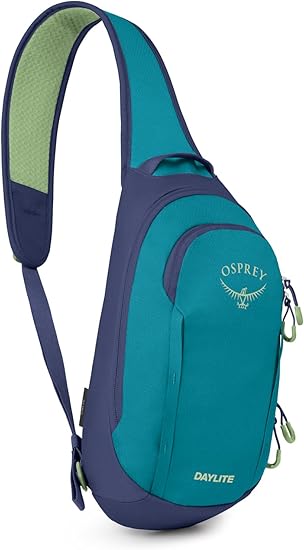
A commuter bag earns trust through boring details. Not flashy ones. Zippers that land where your hand expects them. A strap that does not scrape your neck. A profile that does not bump every person in a crowded aisle. Those choices decide whether a bag becomes part of your day or ends up in a closet. Osprey says the redesigned sling has dual side zippers, daisy-chain details, a shoulder-strap phone sleeve, and soft spacermesh comfort, which are the sort of features that matter more after week three than during the first unboxing. The point is not to decorate the bag with extra parts. It is to reduce the number of small moves you make between home, transit, work, and errands.
A Strap Built for Left or Right Shoulder Carry
Osprey describes its redesigned sling as ambidextrous, with over-the-shoulder carry that can work on either side. That is more useful than it sounds. People have shoulder habits. Some carry a tote on the left, hold coffee in the right, or need to avoid an old shoulder ache. A bag that forces one side can become annoying by lunch.
For commuting, the strap also shapes your posture. A narrow strap can bite when the bag is loaded with a water bottle, phone, wallet, and power bank. A wider, padded strap spreads pressure better, especially when you walk several blocks from a station to the office. Osprey’s product page also points to soft spacermesh material, which matters when the strap sits close to your shirt collar on a warm day.
One example is a worker in Austin who parks in a garage, walks eight minutes downtown, and then climbs a few office stairs because the elevators are backed up. That person does not need an expedition pack. They need a strap that stays put while their hands are full. A compact bag that shifts around every time you cross the street will lose the argument fast.
Phone Access Is the New Water Bottle Pocket
The redesigned model includes an easy-access phone sleeve on the shoulder strap, according to the official product page. That sounds like a small add-on, but modern commuting has made the phone the main tool. Your ticket, map, payment app, building message, family text, and ride update all live there. A decade ago, bag makers fought over bottle pockets. Now the more urgent question is where your phone lives when both hands are busy. That change says a lot about city life. Your most-used item is no longer the thing you drink from; it is the thing that unlocks the next part of your route.
A pocket on the strap changes the rhythm. You do not have to open the main compartment each time the phone buzzes. You also do not have to stuff it into pants pockets where it can jab your leg or slide out in a rideshare seat. For people using mobile transit passes, this can remove a surprising amount of friction from the morning.
Here is the counterintuitive part: faster phone access can make you use your phone less. When a device has a clear place, you are not patting every pocket, opening the wrong zipper, or leaving it on a café table. You check it, return it, and move on. The bag creates a habit, and the habit lowers the noise.
Why an Urban Commuter Sling Bag Feels Right Online
Online gear communities tend to praise products that solve a daily irritation people already feel. That is why a modest sling can create more talk than a huge travel pack. It shows up in mirror photos, desk dumps, train rides, short hikes, dog walks, and weekend errands. It looks ordinary because the problem is ordinary. In a feed full of expensive tech and oversized travel gear, a simple carry piece feels almost refreshing. It is easy to understand, easy to compare, and easy to imagine using tomorrow morning. That lowers the buying barrier. You do not have to picture a vacation, a mountain trail, or a new hobby. You only have to picture your next walk to the corner store.
Everyday Carry Culture Has Moved Past Pocket Stuffing
The everyday carry bag trend is not only about gear collectors laying out knives, pens, and flashlights on a desk. For most people, it is about no longer letting small items scatter across coats, car consoles, tote bags, and kitchen counters. A fixed carry setup saves mental effort. It also prevents the small panic of reaching the office and realizing your badge is still in the jeans you wore yesterday.
A compact crossbody bag fits that shift because it can stay packed. Your charger can live in it. Your transit card can stay in the same pocket. Your earbuds stop migrating between jacket pockets and sofa cushions. That kind of order is not glamorous, but it feels good on a Monday morning. It is the same reason people keep a hook by the door: the system is simple enough to follow when you are tired. The bag becomes a small routine, and routines beat motivation before sunrise.
For a college student in Boston, the sling might hold a phone, keys, wallet, earbuds, small sunscreen, and a folded tote for groceries. For a remote worker in Denver, it may carry café basics while the laptop stays home. Same bag, different rhythm. That flexibility is why the everyday carry bag conversation now includes people who would never call themselves gear people.
Social Proof Works When the Use Case Is Easy to Picture
Some products need a long explanation before anyone understands the appeal. This one does not. A short video can show the whole idea in seconds: sling on, zipper open, phone out, keys clipped, bag back in place. That visual clarity helps a simple product travel online. You do not need a spec sheet to understand why someone likes having both pockets empty.
The non-obvious reason is that the bag does not need to look new to feel useful. Many viral products win because they seem surprising. This kind wins because it seems familiar. People watch it and think, yes, that would clean up my day. That is a stronger reaction than hype because it starts with recognition.
That matters for buyers who hate overthinking gear. An urban commuter sling bag sits in the sweet spot between a fashion accessory and outdoor equipment. It does not ask you to change your style. It gives your pockets a break. Online, that plain usefulness can be more persuasive than a dramatic feature list.
How to Decide Whether This Sling Belongs in Your Routine
A viral moment can make any product feel like the answer. The smarter move is to test your own day against the bag’s limits. This pack is best for small personal items, quick movement, and light errands. It is not trying to replace a laptop backpack, diaper bag, camera cube, or grocery tote. That matters because disappointment often comes from asking a product to do a job it never claimed. A small sling can be excellent and still be wrong for your Wednesday. The goal is not to buy the bag with the loudest online praise. The goal is to buy the one you will still reach for after the excitement fades.
Pack the Day You Actually Live
Start with your normal carry, not your ideal carry. Lay out what you bring when you leave home on a weekday. Phone. Wallet. Keys. Earbuds. Glasses. Badge. Charger. Medicine. Small notebook. Gum. Hand lotion. Then ask what truly needs to be with you all day. This small test tells you more than a dozen polished product photos. Photos show shape and color. Your pocket dump shows the truth.
If that pile stays small, a compact crossbody bag may fit well. If you add a laptop, hardcover book, lunch box, jacket, and full-size water bottle, you are asking the wrong bag to do the wrong job. That is not a flaw. It is a boundary. The right bag should make your habits easier, not punish you for having them.
A good rule is simple: if the bag feels packed before you leave the house, size up. If it has a little breathing room after your essentials go in, you are in the right zone. The best everyday carry bag feels calm when opened, not like a drawer after tax season. That calm is part of the value.
Think About Weather, Clothing, and Crowds
City carry is physical. A sling that feels great over a T-shirt can feel different over a winter coat. A bag that sits flat while walking the dog can shift when you bike, jog across a crosswalk, or squeeze into a packed bus. Try to think about your worst normal day, not your easiest one. The best test is not how it looks in a mirror. It is how it behaves when you are late. A good sling should stay settled when you move fast, not swing around like an extra problem.
Weather matters too. If you live in Seattle, Portland, or parts of Florida, a daily bag will meet rain sooner or later. Check materials, zipper coverage, and how you plan to protect electronics. For broader commuting habits and how Americans move between home and work, the U.S. Census Bureau’s commuting data gives useful context on how varied daily travel can be across the country. A commuter in Phoenix, a ferry rider near Seattle, and a subway rider in Brooklyn are not solving the same carry problem.
The non-obvious insight is that a smaller bag can be better for bad weather. A large backpack soaks more surface area, bumps umbrellas, and takes longer to stash under a jacket or desk. A low-profile sling is easier to shield, especially when it carries only the items that should not get wet. Smaller does not always mean less prepared. Sometimes it means less exposed.
Conclusion
The smartest commuter gear is rarely the loudest piece in the room. It is the thing you grab without a debate because it fits the day you are about to have. That is the real reason this small sling is catching attention. It does not promise to turn errands into an adventure or make office life stylish by force. It solves the tiny carry problems that pile up before lunch. The Osprey Daylite Sling makes sense for people who want fast access, light packing, and a cleaner way to move through American city life. It is not for every load, and that honesty is part of its appeal. The better question is not whether it can carry everything. It is whether it carries the right things without slowing you down. Pair it with practical travel packing advice or compare it with small work bag ideas before buying. Choose the bag that matches your real routine, then let it disappear into the day. Good carry gear should feel almost boring once it starts doing its job.
Frequently Asked Questions
Is this sling bag good for daily commuting?
Yes, it works well for light commutes where you carry small items such as a phone, wallet, keys, earbuds, badge, charger, and sunglasses. It is not the right pick when you need to carry a laptop, lunch box, or bulky layers.
Can a compact sling replace a backpack?
Only for lighter days. A sling can replace a backpack when your load is small and you want faster access. For laptop days, gym gear, textbooks, or lunch containers, a backpack will still carry weight better and offer more room.
What should I carry in an everyday sling?
Pack the items you reach for often: phone, wallet, keys, earbuds, power bank, small cable, transit card, sunglasses, and a tiny personal-care item. Keep it edited. The whole point is to avoid turning a small bag into a clutter pouch.
Is an urban commuter sling bag safe in crowded places?
It can be safe when worn in front or kept close at your side. The main benefit is quick visibility and access. In crowded stations, buses, or markets, swing the bag forward and keep zipper pulls where your hand can feel them.
Does a sling bag work for bike commuting?
It can work for short rides if it sits stable and does not swing into your arm or chest. For longer rides, heavier loads, or wet weather, a bike-specific backpack, pannier, or waist pack may feel more secure and balanced.
How do I know if the size is right?
Load your normal essentials and check whether the bag still closes without pressure. If every pocket feels stuffed, choose a larger bag. If your main items fit with a little spare room, the size will likely feel better during a full day.
Is this style better than a fanny pack?
It depends on how you like to carry weight. A sling often feels better across the back or chest and can look cleaner with casual clothes. A waist pack can be better when you want the load lower and off your shoulders.
What makes a good commuter sling worth buying?
Comfort, quick access, sensible pocket layout, durable fabric, and a stable strap matter most. Looks help, but daily use exposes weak design fast. A good bag should make your routine easier without asking you to adjust it all day.