
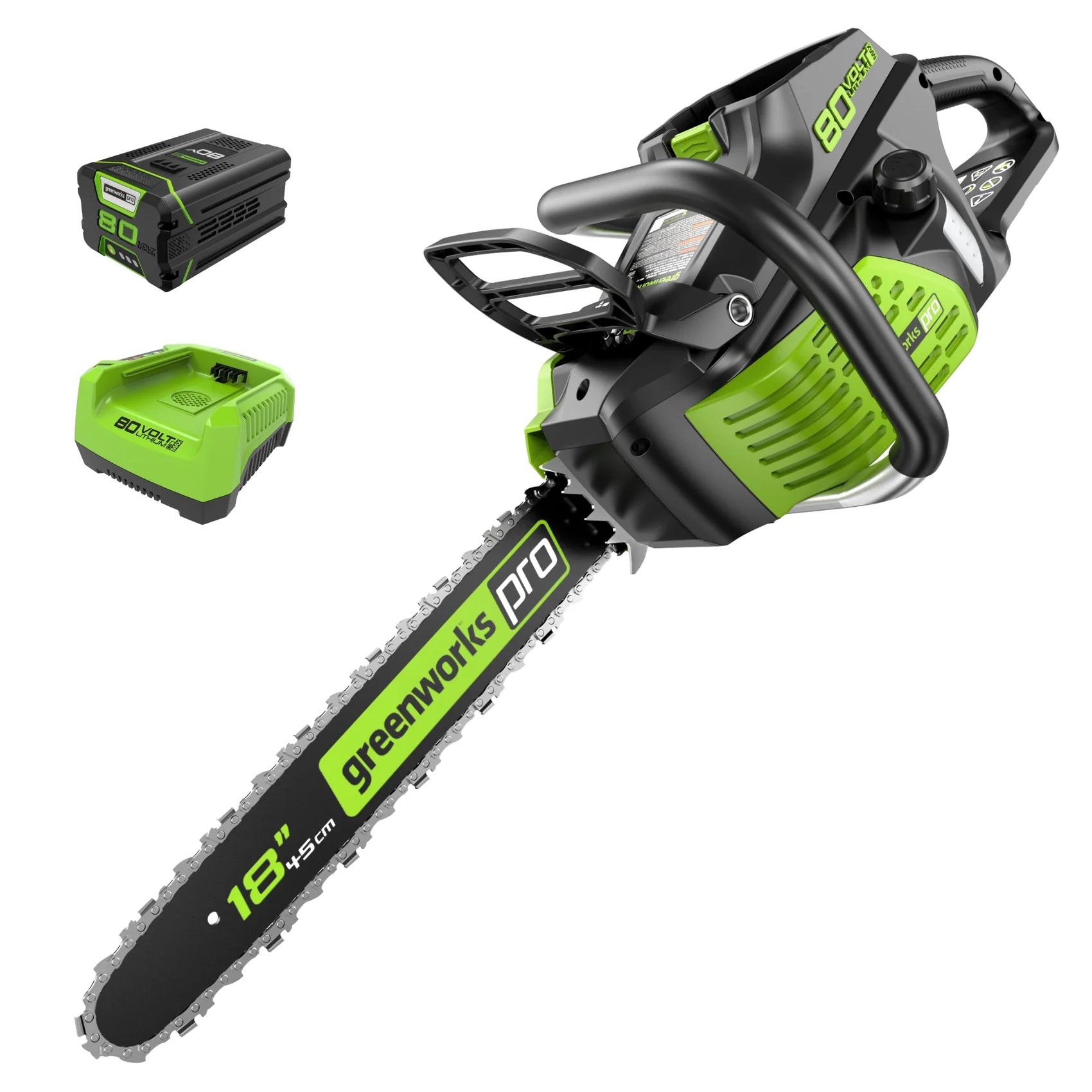
The old backyard rule was simple: serious cutting meant gas. That rule is cracking fast, especially for homeowners who need storm cleanup, firewood prep, and fallen-limb control without turning every job into a small-engine repair session. The 80V cordless chainsaw is winning attention because it answers the part of ownership people rarely admit bothers them most: starting, storing, smelling, and maintaining a gas saw between jobs. GreenWorks lists its 18-inch 80V model with a 2.5kW brushless motor, push-button start, a 50cc gas-equivalent rating, and up to 200 cuts per charge, which puts it in the range many U.S. homeowners once reserved for gas tools.
That shift is not only about power. It is about timing. A homeowner in Georgia clearing oak limbs after a thunderstorm does not want to mix fuel or wonder if stale gas clogged the carburetor. A parent in Michigan cutting branches before winter does not want to pull a starter rope twenty times in cold air. That is why buyer guides, local tool talk, and consumer product news now keep circling back to battery saws. A battery-powered chainsaw no longer feels like the smaller backup tool. For many yards, it feels like the main saw.
Why the 80V Cordless Chainsaw Is Pulling Buyers Away From Gas
Gas saws still have a place. Nobody should pretend a battery model is the right answer for a logging crew or all-day bucking on rural acreage. The real pressure is happening in the middle of the market, where most Americans live. That means quarter-acre lots, weekend cleanup, storm branches, fence-line brush, and the occasional downed tree across a driveway.
The pain point was never only cutting speed
For years, gas owned the reputation battle because it sounded stronger and carried the smell of “real work.” Then homeowners started measuring the whole job, not only the cut. A gas saw may slice fast once running, but the pre-cut ritual can be a drag: fuel mix, choke, pull cord, warmup, idle behavior, spark plug worry, and storage smell in the garage.
That is where the GreenWorks model gets its opening. GreenWorks says the 18-inch 80V 2.5kW kit uses a push-button start, an auto-oiler, a chain brake, and an 18-inch bar, all features that reduce the usual friction before the first cut. For the average homeowner, saving five minutes before every small job can matter more than shaving seconds off a cut.
A non-obvious reason battery saws are gaining ground is that they make people more willing to do small jobs sooner. One limb hanging over the driveway might sit for weeks if the gas saw feels like a chore. With a charged pack, that limb gets handled before it becomes a bigger mess.
A gas chainsaw alternative fits the way Americans use tools now
Most homeowners are not cutting wood every day. They are doing bursts of work. That pattern favors a gas chainsaw alternative because battery tools handle stop-start jobs well. You cut, move brush, check the branch, talk to a neighbor, then cut again. The saw is ready each time.
Gas can feel less forgiving in that rhythm. Let it sit, and you may deal with idle changes. Store it wrong, and the next season starts with a service trip. A battery-powered chainsaw changes that ownership math. You still need bar oil, a sharp chain, and care, but you remove fuel from the equation.
Think about a typical Saturday in a Dallas suburb after a windstorm. You may need ten cuts, not two hours of cutting. In that case, the easier saw often becomes the better saw. That is the quiet reason shoppers are treating the GreenWorks 80V line as more than a cordless novelty.
What the Specs Say When You Read Between the Lines
Specs can mislead if you read them like a race sheet. Bar length, motor rating, and cut count matter, but the right question is simpler: does the tool match the job you will repeat most often? That is where this saw’s mix starts to make sense for home use.
The 18-inch bar changes the buyer conversation
An 18-inch bar puts the GreenWorks model in a useful middle lane. It is larger than the small branch saws many people keep for pruning, but it is not a giant farm saw that wears you out fast. GreenWorks lists the model with an 18-inch bar, metal bucking spikes, a translucent oil tank, and a 14-pound weight with battery.
That weight is worth noticing. A lighter tool is not always safer if it feels twitchy or underbuilt, while a heavy one can drain your arms and lead to sloppy cuts. The middle ground matters. It lets a homeowner cut with control, especially when working around fences, sheds, driveways, or half-fallen limbs.
Here is the counterintuitive part: the 18-inch bar is not only about cutting bigger wood. It also gives you more room on awkward cuts, which can help keep your body farther from the bar. That does not replace training or safety gear, but comfort and spacing can change how cleanly you work.
What a GreenWorks chainsaw review often misses
A typical GreenWorks chainsaw review may focus on whether it “beats gas.” That makes a catchy headline, but it can hide the better question. The better question is whether it beats the gas saw sitting unused in a garage because the owner hates starting it.
GreenWorks states that the 80V 18-inch 2.5kW kit can make up to 200 cuts per charge and works with 75-plus tools in the same 80V battery line. That battery-system detail matters. If you already own an 80V mower, blower, or string trimmer, the saw becomes part of a yard setup instead of a one-off purchase.
That is where the gas comparison tilts. A gas saw asks you to maintain a separate fuel habit. A battery saw asks you to manage charging. For many U.S. households, charging wins because it fits the same routine as drills, leaf blowers, and phones. The habit is already there.
The Real Test Is Storm Cleanup, Not Showroom Power
A showroom can make almost any saw look capable. Fresh chain, clean bar, perfect stance, dry lumber, and no pressure. Real yards are messier. The wood may be wet, the branch may be twisted, and the job may start after work when daylight is fading.
Storm limbs expose weak tools fast
After a spring storm in Ohio or a late-summer blowdown in the Carolinas, you do not judge a saw by marketing language. You judge it by whether it starts, cuts, and lets you keep moving. That is where battery saws have earned trust. No warmup. No flooded engine. No stale fuel surprise.
The GreenWorks 80V saw’s auto-oiler and chain brake are not glamorous features, but they matter during cleanup. The auto-oiler helps keep the bar and chain working as intended, while the chain brake adds another layer of control during a risky task. These are the details that separate a useful yard tool from a toy.
A gas chainsaw alternative also helps in neighborhoods where noise matters. Battery saws still make chain and wood noise, so they are not silent. But they avoid the constant engine sound between cuts. If you are cutting at 8 a.m. after a storm, your neighbors may care.
Safety still starts before the trigger
Battery convenience can create a bad illusion. Because the saw starts so easily, some people treat it like a large power drill. That is dangerous. A sharp chain moving at speed does not care whether the motor uses gas or a battery.
OSHA’s chainsaw safety guidance tells operators to follow the manufacturer’s instructions, check safety devices, use proper protective gear, watch for metal objects in the cutting path, and avoid working alone. That advice belongs in every homeowner’s head before the first cut. A helmet, eye protection, gloves, boots, and chainsaw chaps are not extras for “professionals only.”
There is one more practical habit that saves headaches: inspect chain tension before cutting. University of Missouri Extension notes that a loose chain can come off, while an over-tight chain can bind and overheat. For a deeper prep list, add chainsaw safety gear checklist beside your saw storage spot and treat it like part of the tool.
Who Should Buy It, Who Should Skip It, and Why That Matters
The GreenWorks 80V buyer is not trying to impress a logging crew. That is the wrong frame. The better buyer is someone who wants serious home cutting power without committing to the fuel, noise, and maintenance cycle of a gas saw.
The strongest fit is the serious homeowner
This saw makes the most sense for homeowners with trees, fences, fire pits, wooded edges, or storm-prone yards. If you own a home in Florida, Georgia, Pennsylvania, Tennessee, or anywhere falling limbs are part of the season, the case becomes easy. You need a tool that is ready when weather turns ugly.
It also fits people who already own battery yard equipment. The GreenWorks 80V platform support matters because one battery family can cover several tools. That does not make the saw cheap, but it can make the whole yard system feel smarter over time. For more planning, pair this with battery yard tool comparisons before you buy into any voltage line.
A second non-obvious fit is the older homeowner who still wants to handle property work but does not want a hard-starting saw. Push-button start can keep someone independent longer. That is not a small thing. Tool design affects who gets to keep doing their own yard work.
When gas still earns its space
Gas still makes sense for long cutting days, remote work far from charging, large hardwood rounds, and heavy farm use. If you are cutting cords of firewood every month, battery packs and charge cycles may annoy you. A pro-grade gas saw can still be the better match.
The smart move is not to turn this into a culture war. A battery-powered chainsaw wins when the job pattern favors readiness, cleaner storage, and short bursts. Gas wins when runtime and refill speed matter more than convenience. Both can be true.
That is why the current buyer shift is so interesting. The GreenWorks model is not taking attention because gas became useless. It is gaining because homeowners finally have a gas chainsaw alternative that feels strong enough for common American yard work. Once a tool clears that line, old habits change fast.
Conclusion
The chainsaw aisle is changing because homeowners are tired of tools that make small jobs feel bigger than they are. Power still matters, but readiness matters more when a limb drops across the driveway or a branch needs trimming before the next storm. The 80V cordless chainsaw sits in that sweet spot where convenience no longer feels like a compromise. It gives everyday buyers enough muscle for real cleanup, while cutting out the fuel chores that made many gas saws sit unused.
That does not mean every buyer should leave gas behind. Large rural properties, long firewood sessions, and pro workloads still demand careful tool matching. But for the homeowner who wants clean storage, fast starts, strong cuts, and less drama, the argument has changed. A thoughtful GreenWorks chainsaw review should not ask only whether it can beat gas in one cut. It should ask whether it makes you more likely to finish the job safely and on time. For many Americans this season, that answer is already clear.
Frequently Asked Questions
Is the GreenWorks 80V chainsaw powerful enough for storm cleanup?
Yes, for most homeowner storm cleanup jobs. It is best suited for fallen limbs, medium branches, driveway debris, and smaller tree sections. Heavy trunk work or all-day cutting may still call for a larger gas saw or a professional crew.
How long does the GreenWorks 80V battery last while cutting wood?
Runtime depends on wood type, chain sharpness, battery size, and cut diameter. GreenWorks lists up to 200 cuts for one 18-inch 2.5kW kit, but real yard work often varies because wet hardwood drains batteries faster than clean, dry lumber.
Is a battery-powered chainsaw safer than a gas chainsaw?
No chainsaw is safe by default. Battery models remove fuel handling and pull-start issues, but the chain can still cause severe injury. Wear proper PPE, check chain tension, use both hands, and follow the manual every time.
What size branches can the GreenWorks 80V model cut?
The 18-inch bar gives it room for large branches and moderate logs, but the smartest cut is usually smaller than the full bar length. Let the saw work at a steady pace and avoid forcing it through thick hardwood.
Does the GreenWorks 80V saw need bar and chain oil?
Yes. Battery chainsaws still need bar and chain oil. The motor is electric, but the cutting chain still creates heat and friction. Keep the oil tank filled and check it during longer cleanup sessions.
Is the GreenWorks 80V line better than a 40V chainsaw?
It depends on the job. A 40V saw can be fine for pruning and light work. The 80V line makes more sense for homeowners who cut thicker limbs, handle storm debris, or want more headroom for demanding yard tasks.
Can this saw replace a gas chainsaw for firewood?
It can replace gas for occasional firewood cutting, especially smaller logs and weekend use. For large hardwood rounds or long firewood days, gas may still be easier because refueling is faster than battery charging.
What should I buy with the saw?
Start with chainsaw chaps, eye protection, gloves, hearing protection, bar oil, a spare chain, and a file or sharpening tool. A second battery is also worth considering if your yard has larger trees or frequent storm debris.