
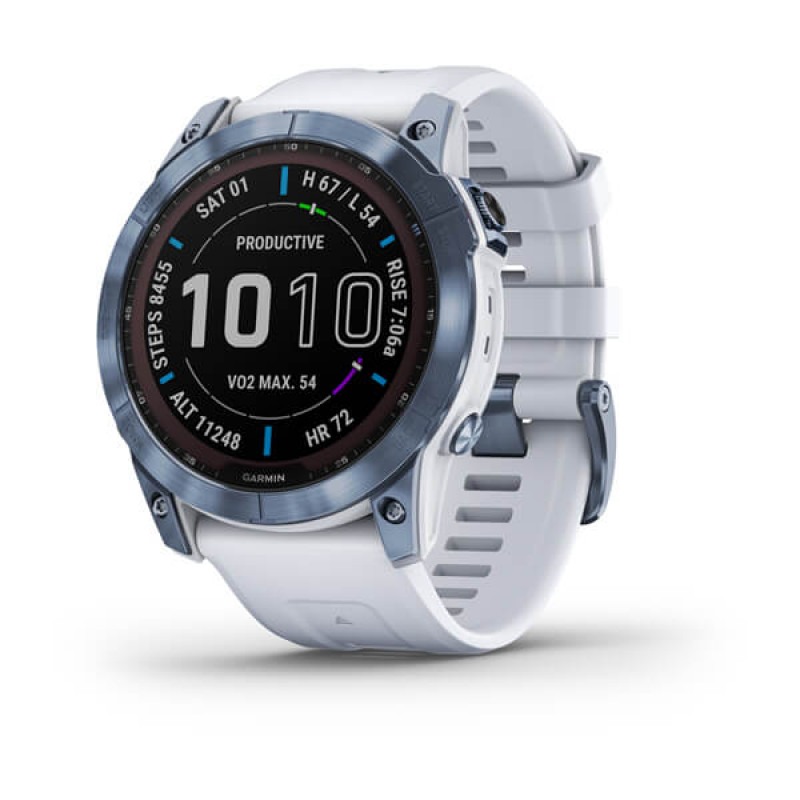
A premium outdoor watch becomes interesting when the discount changes the question from “Can I afford it?” to “Would I use enough of it?” The Garmin fēnix 7X is landing in that zone now, with recent U.S. deal coverage pointing to a steep cut from its original high-end pricing. For runners, hikers, hunters, cyclists, golfers, and weekend trail people, the appeal is not the sticker shock anymore. It is whether a last-generation flagship still feels strong enough beside newer models. The short answer: yes, for many buyers. This Sapphire Solar watch still brings the stuff that ages well: long battery life, rugged build, maps, buttons, solar assist, a flashlight, and serious training tools. Android Central reported a Best Buy deal at $499.99, down from $899.99, which explains why this Garmin watch sale is getting attention from practical buyers rather than gadget collectors. For shoppers comparing gear through trusted product news and buying guides, the better story is not the discount alone. It is what kind of person should grab it before chasing something newer.
Why the Garmin fēnix 7X Deal Feels Bigger Than a Normal Watch Discount
Big discounts on premium wearables can be tricky. A cheaper price does not always mean better value, because watches age in strange ways. Phone-like features age fast. Outdoor utility does not. That difference matters here.
The price drop changes the buyer, not the watch
At full price, this model mostly made sense for people who already knew they needed a large outdoor watch. Think ultrarunners, backcountry hikers, adventure racers, or buyers who wanted a rugged daily watch and did not blink at a premium price. At a much lower sale price, the audience gets wider.
A dad in Colorado who hikes twice a month, runs three times a week, and wants one watch for ski days suddenly has a reason to look. So does a Texas cyclist who wants maps and battery life without paying current flagship money. That is why this Garmin watch sale feels different from a normal electronics markdown. It invites buyers who were priced out before.
The non-obvious part is that a lower price can make a serious watch better. Not technically better. Mentally better. When a device costs near four figures, every missing feature feels annoying. When it drops into a more reachable range, the same feature set starts to look generous.
Last-generation does not mean weak
A lot of buyers hear “last-generation” and assume the watch has fallen behind. That can be true for screen tech, voice features, and certain health sensors. It is less true for navigation, battery life, durability, and outdoor controls.
This model still has a 1.4-inch always-on display, a scratch-resistant Power Sapphire solar charging lens, built-in LED flashlight, GPS features, wellness tracking, and preloaded TopoActive maps listed in current retail product details. It also lists up to 28 days in smartwatch mode indoors, up to 37 days with solar charging, up to 89 hours in GPS mode indoors, and up to 122 hours with solar under the stated sunlight conditions.
That does not mean every buyer will get those exact numbers. Most people use notifications, backlight, workouts, sensors, and phone pairing in ways that pull battery down. Still, the point stands. This is not a budget watch pretending to be rugged. It is a former flagship wearing a sale tag.
What Still Makes This Sapphire Solar Watch Worth Considering
The strongest reason to buy this model is not one feature. It is the way the features work together when you are away from a charger, away from perfect cell service, or away from a clean routine. That is where a multisport GPS watch earns its keep.
Battery life matters more than most specs
A bright screen is fun in a store. Battery life matters on day four of a trip, when your phone is at 18 percent and your watch still has room to work. That is the quiet reason many outdoor buyers stay loyal to Garmin.
For a normal U.S. user, think about a long weekend in Utah, a camping trip in the Smokies, or a fall hunting weekend in Wisconsin. You may track hikes, check sunrise, follow a route, use the flashlight, and glance at weather alerts. A short-battery smartwatch turns into another thing to manage. This one is built to avoid that feeling.
There is also a behavior change here. When you trust the battery, you use the watch more freely. You track the walk back to the truck. You keep maps open longer. You stop babying the settings. That is where long battery life becomes more than a spec.
The flashlight is not a gimmick once you use it
Some features sound silly until they save a small moment. The built-in LED flashlight is one of those. It is not meant to replace a headlamp on a night hike. It is the light you actually have when you forgot the headlamp in the car.
That matters during plain American life, not only outdoor trips. Walking the dog before sunrise. Finding a dropped key beside the porch. Moving through a dark hotel room without waking your family. Checking a trail marker after sunset. These are small jobs, but they happen.
Garmin’s own support material describes flashlight controls that include brightness, strobe, color, and activity settings for compatible watches. On this 51mm model, that turns a fitness watch into a practical tool. It is not flashy. That is the point.
Where the Multisport GPS Watch Beats Cheaper Fitness Trackers
A cheaper tracker can count steps, record runs, and measure heart rate. For many people, that is enough. The difference starts when you need context, not only numbers. Maps, route handling, buttons, long GPS sessions, and sport profiles make the gap wider.
Outdoor navigation is the real dividing line
The preloaded TopoActive maps matter because they reduce phone dependence. A phone is still useful, but it is not always ideal on trail. It may be packed away, wet, cold, low on battery, or hard to read in bright sun. A watch map is not perfect, but it is always on your wrist.
Imagine hiking in North Carolina and missing a turn near a spur trail. You do not need a dramatic survival story for mapping to matter. You need one wrong fork, one tired group, and one fading afternoon. A watch that can help you check direction quickly can keep a small mistake from becoming a long detour.
The counterintuitive truth is that mapping is useful even when you know the area. Local routes are where people get casual. They stop paying attention. A multisport GPS watch gives you a second layer of awareness without forcing you to pull out a phone every mile.
Buttons still beat touchscreens in rough conditions
Touchscreens are nice on the couch. Buttons win in rain, sweat, gloves, cold air, and mud. That sounds old-school until you try to pause a workout with wet fingers during a summer storm in Florida.
This watch combines button control with a touchscreen, which is the right mix for outdoor use. You can swipe through menus when life is calm, then use buttons when conditions get messy. Amazon’s product details call out button controls matched with a touchscreen interface, which is a practical design choice for a rugged watch rather than a fashion-first wearable.
This is also why the size makes sense for some buyers. A 51mm case is not subtle. On a small wrist, it can feel large. But the extra body supports the battery, screen, and flashlight that make the watch useful in the first place.
Who Should Buy It, Who Should Skip It, and What to Check First
A sale can make people rush. That is how buyers end up with gear that looks amazing online and feels wrong on the wrist. This model is a strong value for the right person, but it is not a universal pick.
Buy it for durability, not for the newest smartwatch tricks
You should consider it if you want a serious outdoor watch, long battery life, route support, built-in maps, and a rugged build. It makes sense for trail runners, hikers, cyclists, golfers, campers, hunters, road runners who travel, and anyone who prefers fewer charges.
You should be more careful if you want the newest display style, voice calling from the wrist, or the freshest health sensors. Android Central noted that buyers choosing this older model give up newer features such as an AMOLED display, ECG, skin temperature monitoring, and a built-in microphone for calls. Some users will not care. Others will.
That is the honest split. This is a tool watch first. A smartwatch second. If your priority is outdoor confidence, the sale makes sense. If your priority is phone-like polish, compare newer models before buying.
Check size, condition, seller, and return terms
The 51mm size deserves respect. It looks right on many wrists, but not all. Before buying, measure your wrist or try any 51mm sports watch in person. A deal does not help if the watch feels like a hockey puck by day two.
Also check whether the listing is new, open-box, refurbished, or renewed. A renewed unit can still be a smart buy, but the warranty, condition, and seller reputation matter. Read the return window before checkout. For a high-end wearable, a clean return path is part of the value.
Then compare the sale price against alternatives. A GPS watch comparison guide can help you decide whether you need maps and solar charging, while a running gear buying checklist can keep you from paying for features you will never touch. The best deal is the one that fits your week, not someone else’s adventure reel.
Conclusion
The best sale prices do more than lower a number. They reveal which products still have real strength after the hype has moved on. This watch fits that pattern. It is not the newest Garmin, and that matters if you want the latest screen, call features, or health sensors. But for outdoor use, training, travel, and long battery life, the core package still feels serious. The Garmin fēnix 7X now sits in a rare value lane: old enough to be discounted, strong enough to stay useful, and rugged enough for people who do more than count steps. Do not buy it because the markdown looks loud. Buy it because maps, battery, buttons, solar assist, and a wrist flashlight match how you move through the week. For the right buyer, this is not a compromise. It is the smart way into a premium outdoor watch without paying premium-launch money.
Frequently Asked Questions
Is the 7X Sapphire Solar model still worth buying in 2026?
Yes, it is still worth buying for outdoor users who care about battery life, maps, durability, and training tools. It makes less sense for buyers who want the newest display, wrist calling, or the latest health sensors found on newer Garmin models.
How big is the 51mm Sapphire Solar watch on the wrist?
It is large and feels best on medium to larger wrists. Smaller-wrist buyers may still like it for outdoor use, but they should try a similar 51mm watch first or buy from a seller with easy returns.
What makes this Garmin watch sale better than a cheaper fitness tracker?
The value comes from outdoor tools that cheaper trackers often lack, such as maps, long GPS battery life, rugged controls, solar assist, and sport depth. A basic tracker is fine for steps. This model is built for longer days outside.
Does solar charging mean the watch never needs charging?
No. Solar charging extends battery life under strong light, but it does not remove charging from your life. Think of it as support, not magic. Heavy GPS use, backlight, music, and sensors will still drain the battery.
Is the built-in flashlight useful for everyday use?
Yes, the flashlight is useful for small daily tasks and outdoor moments. It helps with early dog walks, dark rooms, trail checks, campsite chores, and finding dropped items. It is not a full replacement for a headlamp.
Should runners choose this over a lighter Garmin watch?
Runners who want maps, long battery, and rugged features may like it. Runners who care most about low weight and race-day comfort may prefer a lighter Forerunner model. The right choice depends on distance, terrain, and wrist comfort.
What should I check before buying a discounted unit?
Check whether it is new, renewed, open-box, or refurbished. Review seller ratings, warranty terms, return policy, included band, charger, and color. Also compare the final checkout price, since shipping or membership terms can change the real deal.
Who should skip this watch even at a record low price?
Skip it if you want a slim daily smartwatch, the newest Garmin display, voice features, or advanced health sensors from newer models. Also skip it if a large 51mm case bothers you during sleep or office wear.