
A hard case does not create the same shopping buzz as a phone, sneaker drop, or kitchen gadget. That is why the sudden attention around the Pelican Air 1535 feels different. Buyers are not chasing a pretty suitcase. They are watching a serious gear case fall into a price range that makes sense for photographers, drone owners, tradespeople, and frequent U.S. travelers who hate trusting soft luggage with expensive tools.
The appeal is simple: when a protective carry on hard case costs less than expected, people start doing the math fast. A cracked camera body, damaged lens, broken monitor, or crushed field recorder can cost more than the case itself. For readers tracking practical deal alerts through smart consumer buying trends, this is the kind of product that turns from “someday” into “buy now” when the discount looks deep enough.
Still, price is only part of the story. A case like this needs to fit your gear, fit your airline, and fit the way you move through airports, job sites, hotels, and weekend shoots.
Why Pelican Air 1535 Gets Attention When the Price Drops
The first reason this case draws heat during a sale is that it sits in a narrow sweet spot. It is not a fashion carry-on. It is not a giant checked trunk. It is a protective roller built for people who carry gear that cannot be casually replaced after one bad baggage moment.
The deal matters because the case is not a normal suitcase
Most luggage gets judged by pockets, fabric, spinner wheels, and how nice it looks next to a boarding gate window. This case gets judged by a different standard. You look at latches, seals, interior depth, wheel strength, divider options, and whether your gear will shift when a shuttle driver stacks bags in the wrong order.
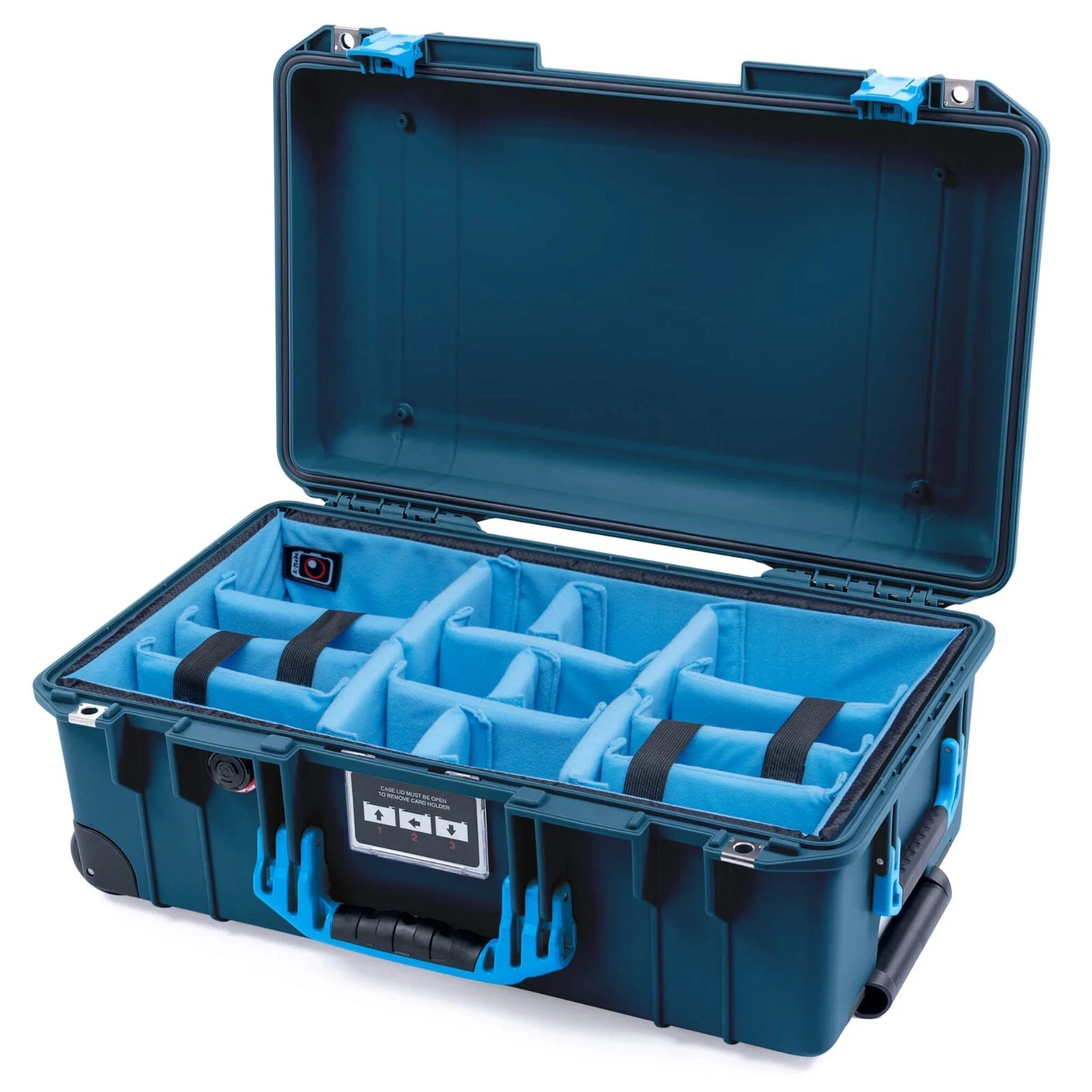
Pelican lists the 1535 Air Carry-On Case with an exterior size of 21.96 x 13.97 x 8.98 inches and an interior size of 20.39 x 11.20 x 7.21 inches, with several interior options including foam, padded dividers, and TrekPak-style organization. The official page also describes it as waterproof, crushproof, dustproof, made in the USA, and built with a lighter HPX² polymer design.
That is why a low price gets noticed. A regular suitcase on sale is nice. A protective case on sale changes the cost of protecting a whole kit.
A wedding photographer in Dallas, for example, may pack two camera bodies, a 24-70mm lens, a flash, batteries, memory cards, and an audio recorder. A soft roller can carry those items. A camera travel case like this can keep them organized and guarded against the rough little hits that happen before the event even begins.
A low price changes who can justify it
At full price, many people admire this case and keep scrolling. They know it is good. They also know they have rent, insurance, software subscriptions, gas, and a dozen other bills waiting. A discount changes the question from “Do I want it?” to “Will I regret skipping it?”
That is where the viral part makes sense. People who already knew the brand start telling friends. Creators post packing layouts. Contractors compare it to cheaper boxes. Drone pilots ask whether the interior height works for their setup. Suddenly, the conversation is not only about a sale. It is about whether this is the moment to upgrade from a padded backpack or a patched-up old roller.
The non-obvious point is that the best buyer may not be the person with the most expensive gear. It may be the person who moves gear the most often. A $2,000 camera used twice a month faces less risk than a $700 tool kit dragged through airports every week.
A lower price also helps buyers who need two cases. One for cameras. One for lights, cables, monitors, or field gear. That is a bigger decision, and a deal can make the second case feel possible instead of excessive.
What Makes This Carry On Hard Case Different From Soft Luggage
Soft luggage works for clothes because clothes forgive you. Shirts bend. Hoodies compress. Socks do not care if someone shoves a backpack on top of them. Gear is less forgiving. Once glass, batteries, screens, drones, or test equipment enter the bag, the rules change.
Hard-shell protection earns its keep during messy travel days
Airport travel is not one smooth event. It is a chain of small risks. You lift the case into a rideshare. You roll it across cracked parking concrete. You pull it through security. You squeeze past another passenger in the aisle. Then you hope there is overhead bin space before the gate agent starts tagging bags.
A waterproof rolling case gives you more control in that chain. You are not betting on soft padding alone. You are using a hard outer shell, a sealed design, and a layout that can be shaped around the gear instead of stuffed around it.
Pelican says the model uses Press and Pull latches, a retractable trolley handle, stainless-steel bearing wheels, an automatic pressure valve, an O-ring seal, and stainless steel padlock protectors. Those features sound small until you are standing outside a hotel in Atlanta rain, or rolling through a production load-in at 6 a.m. with three people waiting on your gear.
There is a trade-off, though. Hard cases take discipline. If you toss random items inside without dividers or foam, the shell protects the outside while the inside becomes a gear blender. The case is only as smart as the packing system you build.
That is why many serious buyers look past the empty shell price. They ask what the final setup costs with foam, dividers, lid organizers, or TrekPak panels. The cheapest version may not be the best value if it makes your kit harder to use.
The weight story is more useful than it sounds
People love the word “Air” because it suggests lightness. Still, this is not a featherweight tote. Pelican lists the 1535 Air at 8.69 pounds without foam, 9.98 pounds with foam, and 14.15 pounds in another listed configuration, depending on setup.
That matters for U.S. flyers because carry-on weight rules vary less visibly than size rules. Some domestic airlines focus mostly on dimensions, while some international routes and smaller aircraft can be stricter. The case may be carry-on sized, but your packed load still needs common sense.
Here is the practical angle: the lighter shell does not mean you should pack heavier. It means you have more room to keep the total load manageable. Put another way, the case saves weight so your gear can spend it.
A videographer flying from Phoenix to Chicago might think the smartest move is to fill every slot. That feels efficient at home. At the airport, it can become annoying. The better move is to pack the mission, not the maximum. Camera body, two lenses, batteries, charger, cards, mic, and one backup cable kit. Leave the “maybe” items in another bag unless the job truly needs them.
A carry on hard case should protect your work, not punish your wrist.
Who Should Buy It, And Who Should Skip It
A product can be excellent and still wrong for a buyer. That is the part many deal pages miss. A discount is not a personality match. It is only a price. You still need to ask whether this case fits your life or only your wish list.
Photographers, drone owners, and field workers get the clearest value
The strongest buyer is someone who carries fragile, high-value, oddly shaped gear. A camera travel case earns its place when you need fixed compartments, hard protection, and quick visual inventory. You open the lid and know what is missing before you leave the driveway.
Photographers are obvious candidates. Drone pilots are close behind. So are audio engineers, survey techs, mobile repair specialists, traveling tattoo artists, trade show staff, and anyone who takes expensive gear from one location to another.
One real-world example: a real estate photographer in Tampa might carry a mirrorless camera, wide lens, drone controller, spare batteries, flash trigger, and compact light. None of that is massive. All of it is annoying to replace before a morning shoot. A hard roller makes sense because the value is not only damage protection. It is speed. You know where each item lives.
That is the hidden win. Organization lowers stress. Protection gets the headline, but repeatable packing is what people love after the first month.
The case also suits buyers who work from vehicles. A soft bag slumps in a trunk. A hard case stacks better, resists damp floors, and creates a small “mobile gear drawer” that does not collapse when tools or jackets land next to it.
For more gear-focused buying help, an internal guide like camera gear packing tips can sit naturally beside this topic because the case decision is only one part of a safer travel setup.
Casual travelers may be happier with something softer
This is not the best case for everyone. If you mostly pack clothes, shoes, toiletries, and a laptop sleeve, a soft or hybrid carry-on may feel easier. You will get more flexible pockets, more forgiving packing space, and a less industrial feel.
Hard cases also attract attention. That can be good or bad. At a shoot, a sturdy case tells people you came prepared. At a hotel lobby, it may tell people there is valuable equipment inside. That does not mean you should avoid it. It means you should think before covering it with camera brand stickers or leaving it parked beside a café chair.
Another thing: hard interiors can be less friendly for mixed travel. If Monday is a camera job and Tuesday is a family flight, you may not want to rebuild the layout every time. Dividers help, but they do not turn the case into a normal vacation bag.
The counterintuitive advice is simple. Do not buy this because it is tough. Buy it because your routine needs toughness. There is a difference.
A nurse traveling for temporary assignments with clothes and a laptop probably does not need this. A mobile ultrasound tech carrying sensitive accessories might. A college student flying home twice a year probably does not need it. A film student hauling rented lenses across campus might.
How To Judge The Price Before You Click Buy
The title says lowest price, and that is exactly why shoppers should slow down for a minute. Not every listing is the same. A case with foam, a case with no foam, a case with padded dividers, and a case sold through a custom color shop can all show different prices.
Compare the exact configuration, not only the model name
The biggest mistake is comparing one listing against another without matching the interior. An empty shell can look cheap until you add the insert you actually need. Foam can work well if your kit stays stable. Padded dividers are better if your gear changes often. TrekPak-style layouts can feel cleaner for camera bodies, lenses, and drone parts, but they often cost more.
So the smart move is not to ask, “Is this the lowest price?” Ask, “Is this the lowest price for the setup I would actually use?”
That one question saves money. A buyer in Denver may see a bare case deal and celebrate. Then they add dividers later and land near the price of a better bundle. Another buyer may grab a foam version because it is cheaper, then regret cutting the foam after changing lens sizes.
Price history can also get messy when color, seller, coupon, shipping, and tax enter the picture. Some third-party trackers show lows tied to specific variants or marketplace listings, not always every configuration from every seller. That does not make the deal fake. It means the headline needs a closer look before you trust it with your card.
A waterproof rolling case is a long-term purchase, so the better deal may be the one that fits cleanly on day one.
Check airline fit, battery rules, and return terms
Size is only one travel issue. Pelican calls the 1535 Air the maximum airline carry-on size and also tells shoppers to check exact airline measurement rules. That warning matters because aircraft, fare class, and gate staff can all change the real experience.
Battery rules matter too. The FAA says spare lithium metal batteries, spare lithium-ion batteries, portable rechargers, power banks, e-cigarettes, and vaping devices are not allowed in checked baggage and must travel with the passenger in carry-on baggage. It also says these items should stay accessible and protected from damage or short circuits.
That makes a carry-on gear case useful for camera batteries, drone batteries, audio batteries, and power banks, but it also creates a planning issue. If the case gets gate-checked, you need to remove spare batteries and keep them with you. Build your packing layout so those items are easy to reach.
Do not bury batteries under foam blocks and a tool pouch. Put them in a small case or pouch near the top, with terminals protected. It is boring advice until you are at the gate with a line behind you.
Return terms also deserve attention. A case can look perfect online and feel wrong once your actual gear goes inside. Before buying, check whether the seller accepts returns after the case has been opened, whether inserts can be returned, and whether custom colors or modified bundles have different rules.
For a related internal article, carry-on luggage buying mistakes would pair well here because hard cases force different choices than soft luggage.
Conclusion
A deep discount can make a serious gear case feel easier to justify, but the smartest buyers will look past the headline. The real value sits in the match between your gear, your travel style, and the exact configuration on sale.
The Pelican Air 1535 makes the most sense for people who move fragile equipment often and want a cleaner, safer way to carry it. It is less convincing for casual travelers who need flexible clothing space or exterior pockets. That is not a weakness. It is a sign that this case knows what it is.
Before buying, confirm the interior setup, final price after shipping and tax, airline fit, and battery access plan. If those details line up, this may be one of those rare sale moments where waiting costs more than acting.
Buy the case because it solves a real problem, not because the internet got loud.
Frequently Asked Questions
Is the Pelican 1535 Air case worth it for photographers?
Yes, it can be worth it for photographers who travel with fragile bodies, lenses, flashes, batteries, and small accessories. The value comes from hard protection and clean organization. Casual hobbyists with one camera and one lens may be fine with a padded shoulder bag.
Does this case fit in most U.S. airline overhead bins?
It is designed around carry-on sizing, but you should still check your airline’s current limits before flying. Small regional jets, packed flights, and gate-check rules can change the experience. A listed carry-on size is helpful, not a lifetime guarantee.
Should I buy the empty case or a divider version?
Buy the empty version only if you already have a packing system or plan to build one. For camera gear, padded dividers or TrekPak-style inserts usually make more sense. Foam works best when your gear layout stays mostly the same.
Can I use this as normal vacation luggage?
You can, but it may not feel ideal for clothes and shoes. The hard shell protects well, yet the interior is better suited to organized gear than soft packing. A regular carry-on is often easier for family trips or casual travel.
Is a waterproof rolling case useful outside airports?
Yes, it can be useful in cars, garages, studios, campsites, job sites, and outdoor shoots. The main benefit is not only water resistance. It is having a sturdy, stackable, organized case that keeps gear from shifting during rough handling.
What should I check before buying a discounted listing?
Check the seller, final price, interior option, color, warranty terms, shipping cost, return rules, and whether the listing is new or used. Compare the exact configuration, not only the model name. A cheap empty shell may cost more after accessories.
Can I pack camera batteries inside this case?
You can pack batteries for carry-on travel, but spare lithium batteries and power banks need to stay with you and remain accessible under FAA guidance. Protect battery terminals and avoid burying them where they are hard to remove during gate checks.
Who should skip this case even if the price is low?
Skip it if you mainly carry clothes, want outside pockets, dislike industrial-looking luggage, or rarely travel with fragile gear. A discount does not matter if the product does not match your routine. The best deal is still the one you will use.