
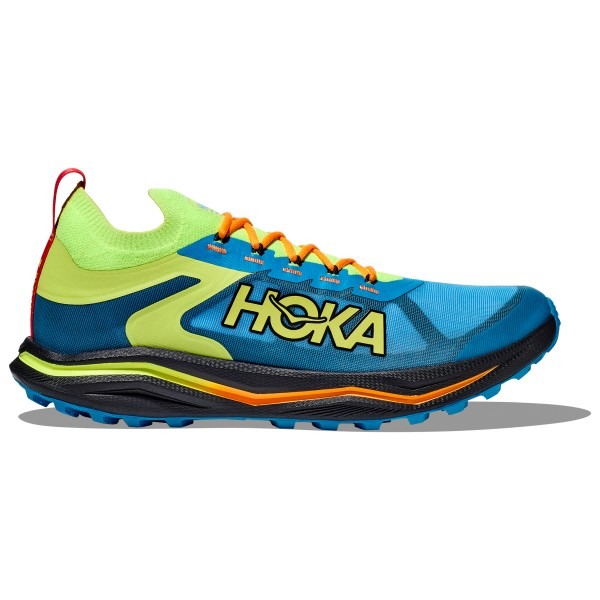
The fastest trail shoes are not always the softest ones, and that is where the current buzz starts to make sense. Hoka Zinal 2 is catching attention because it feels built for runners who want quick turnover, close ground feel, and enough bite underfoot to move with confidence on dirt, gravel, and rolling singletrack. It is not the shoe you buy because you want a couch under your feet. You buy it because you want the trail to answer back. For U.S. runners watching race-day gear, social chatter, and running gear spotlight coverage, the sudden demand says something bigger than one model selling through sizes. It points to a shift away from oversized trail comfort and toward sharper, lighter shoes that reward better footwork. That makes the hype easier to understand, but it also needs a fair read. A fast trail running shoe can feel magic on the right route and punishing on the wrong one.
The Trail Shoe Rush Has Shifted Toward Speed
American trail runners used to split shoes into two easy groups: soft shoes for long miles and firm shoes for short races. That line has started to blur. More runners now want a shoe that can handle quick weekday hill repeats, a local 25K, a packed-dirt marathon, and maybe a careful ultra where the course is not too brutal. The result is a wave of interest in shoes that feel stripped down without feeling bare.
Why runners are leaving heavy shoes at home
Weight matters more when the trail tips uphill. A few ounces may not sound like much while you are standing in a store, but it starts to show up after an hour of climbing fire road outside Boulder, grinding through switchbacks in the Wasatch, or trying to hold cadence on a dry California ridge. A lighter shoe does not make you fitter. It removes one small tax from every step.
That is why the lightweight trail racer category has gained so much attention. Runners who already own thick, protective shoes are adding something quicker for race days and faster training. They are not replacing comfort completely. They are building a two-shoe setup: one pair for long survival miles, one pair for days when every step needs snap.
The non-obvious part is that lighter shoes can sometimes feel safer, not riskier. On smooth trails, a lower and quicker platform may help you place your foot better. You are not floating above the ground. You are reading it. That can matter when loose gravel, roots, and off-camber turns punish lazy steps.
Where the ultra race shoe label gets tricky
Calling any low-profile shoe an ultra race shoe can be risky. Ultra distance is not one thing. A 50K on buffed Arizona desert trail asks for different gear than a wet 50-miler in the Appalachians. One rewards speed and rhythm. The other may punish thin protection before halfway.
This is where smart runners slow down before buying into the hype. A shoe can be race-ready without being right for every race. If your course is packed dirt, rolling climbs, and steady footing, a lighter model may feel fresh late because it never felt bulky early. If your route has sharp rock gardens, long downhills, and tired legs after midnight, protection starts to matter more than snap.
That distinction matters for shoppers reading trail running shoe comparisons. The best pick is not the one with the loudest buzz. It is the one that matches your terrain, pace, and how cleanly you move after fatigue sets in.
Why Hoka Zinal 2 Fits the Fast Trail Moment
The reason Hoka Zinal 2 feels suited to this moment is simple: it gives runners a direct ride at a time when many trail models are getting taller, softer, and more complex. It has a lower feel, a grippy outsole, and a design that speaks to people who want speed without a plate doing all the work. That makes it interesting because it does not follow the loudest trend in running shoes. It feels more like a tool than a statement.
Grip matters more when the pace gets honest
Fast trail running exposes weak traction fast. Jogging across loose dirt is forgiving. Racing across it is not. Once you lean into a turn or push down a short descent, the outsole either earns trust or makes you back off.
The shoe’s appeal comes from that promise of bite. Vibram Megagrip-style outsoles have a strong name among trail runners because they tend to hold well across dry dirt, mixed rock, and uneven ground. Add deeper lugs, and you get a shoe that does not feel limited to groomed park paths.
A practical example: think about a runner training in Colorado Springs who spends Tuesday on crushed gravel, Saturday on rolling singletrack, and race day on a high-desert course with dusty turns. A soft road-to-trail shoe may feel fine early, then slide when the trail gets loose. A sharper outsole lets that runner stay relaxed. Less braking. Less guessing.
The lower feel is the hidden selling point
Many runners assume more cushion always means more confidence. That is not always true. A tall, soft shoe can feel pleasant in a straight line, then vague when the trail bends or tilts. A lower shoe can feel less forgiving, but more honest.
That honesty is part of the draw. You feel the ground sooner, so your stride adjusts sooner. On a fast 10-mile trail race, that can be a gift. On a rocky 50K, it may become work. The same trait can be a strength or a flaw, depending on where you use it.
This is why the lightweight trail racer label fits better than a blanket “all-distance” claim. The shoe’s personality points toward fast days, skilled feet, and runnable routes. It is less about babying your legs and more about keeping your stride awake.
How U.S. Trail Runners Should Read the Hype
The American trail scene is too varied for one shoe story. A model that shines in Marin County may feel harsh in Pennsylvania. A runner who loves it in Utah may shelve it after one muddy loop in Vermont. So the demand is real, but it needs geography attached to it.
Western singletrack rewards fast feet
Out West, many trail races include long stretches where a quick shoe makes sense. Arizona desert paths, California fire roads, Colorado foothill trails, and parts of Oregon’s smoother singletrack can reward a runner who wants light weight and ground contact. You still need grip, but you may not need a tank.
That is where this kind of trail running shoe can feel at home. You can climb without dragging extra foam. You can descend with more feel underfoot. You can pick your line through dry turns instead of letting the shoe steer for you.
The quiet insight is that the shoe may help most before race day. Fast trail sessions ask for focus. A lighter, lower platform can teach cleaner foot placement because it gives less room for sloppy movement. You learn to run the trail instead of stomping through it.
East Coast roots and rocks ask harder questions
The East Coast changes the conversation. Roots stay slick. Rocks hide under leaves. Trails squeeze your stride into awkward little decisions every few seconds. In places like the Catskills, North Georgia, or western North Carolina, a light shoe can still work, but the margin gets smaller.
That does not mean East Coast runners should ignore the hype. It means they should test it on local dirt before trusting it for a long race. A 6-mile loop with roots, wet bridges, and short rocky drops will tell you more than any online review.
For runners building a race setup, ultra marathon gear planning should start with the course map, not the product page. Look at surface, climb, descent, aid station gaps, and weather. Then pick the shoe. Not the other way around.
Buying Timing, Fit, and Race-Day Use
Sellout talk can make any shoe feel urgent. That urgency helps brands, but it can hurt runners. A good race shoe still has to fit your foot, your route, and your training habits. Demand is a signal. It is not a fitting session.
When sellouts signal real demand
When sizes start disappearing, it often means one of three things. The shoe has strong word of mouth, the supply is limited, or runners are buying pairs before a race block. In this case, all three may be part of the story. Trail runners who find a shoe that feels fast often buy a backup pair, especially when race season is close.
That behavior can make a model look more viral than it is. A small group of serious runners buying two pairs each can move inventory faster than a large group casually browsing. The buzz still matters, but the reason behind it matters more.
A smart buyer checks availability, then pauses. Is the shoe for your race, your training, or the idea of the runner you want to be? That question saves money. It also saves toenails.
How to test it before race day
Do not make your first serious outing a race. Start with a short trail run where you know every turn. Pay attention to heel hold, toe pressure, arch feel, and how your calves respond. A lower, faster shoe can change how your lower legs work, even if the fit feels fine in the kitchen.
Next, test it on the kind of downhill your race includes. Smooth downhill is one thing. Loose, rocky downhill is another. If your feet start searching for protection after 40 minutes, listen. That is not weakness. That is useful data.
For an ultra, the best role may be selective. It could be a brilliant first-half shoe for a runnable 50K, or a fast-day trainer that sharpens your legs before you switch to a cushier race option. The worst use is forcing it into a course that asks for more protection than it wants to give.
Conclusion
Fast shoes always create temptation because they make effort feel cleaner. They invite you to run with better posture, quicker feet, and less drag. That is why the current attention around this model makes sense. Still, the smartest runners will treat Hoka Zinal 2 as a precise tool, not a universal answer. It belongs on routes where grip, feel, and turnover matter more than deep cushion. It may not be the best choice for every ultra, and that is fine. The best gear does not need to fit every job. It needs to fit the right one well. For American runners watching sellouts and race-day chatter, the move is clear: match the shoe to your terrain, test it before the starting line, and buy with your feet instead of the hype.
Frequently Asked Questions
Is this shoe good for ultra racing?
It can work for shorter or smoother ultras where the route is runnable and not too rocky. For long, rough courses, many runners may want more cushion and underfoot protection. The fit, terrain, and your downhill tolerance matter more than the distance label.
What kind of runner should consider this model?
It suits runners who like a light, quick, ground-connected feel on trails. It is best for people with efficient foot placement who do not need a plush ride. Runners who prefer soft protection may want a more cushioned option.
Is it better for racing or daily training?
It makes the most sense for racing, speed sessions, hill workouts, and shorter trail efforts. Some runners can train in it often, but it is not the safest everyday pick for everyone. Rotate it with a softer trail shoe for long mileage.
How does a lightweight trail racer feel different?
It usually feels quicker, lower, and more direct than a high-cushion trail shoe. You may notice faster turnover and better ground feel. The tradeoff is less comfort when the trail gets rocky, steep, or rough for a long stretch.
Should beginners buy a fast trail shoe first?
Most beginners should start with a more forgiving trail model. A fast shoe can feel fun, but it asks more from your feet and calves. Build trail skill first, then add a race-focused pair when you know your terrain and stride.
What terrain fits this shoe best?
Dry dirt, packed trails, gravel, rolling singletrack, and moderate technical routes are the best match. It can handle uneven ground, but it is not the most protective choice for sharp rocks, long descents, or sloppy mud.
Can it replace a cushioned ultra race shoe?
For some runners on smoother courses, yes. For many ultra runners, no. A cushioned ultra race shoe still makes more sense when comfort, swelling room, and late-race protection become more valuable than low weight.
How should I check the fit before keeping it?
Try it with the socks you race in, then test it on a short trail route. Watch for pressure across the midfoot, heel lift, toe rub, and calf tightness. A shoe that feels exciting for ten minutes still needs to feel controlled after fatigue.